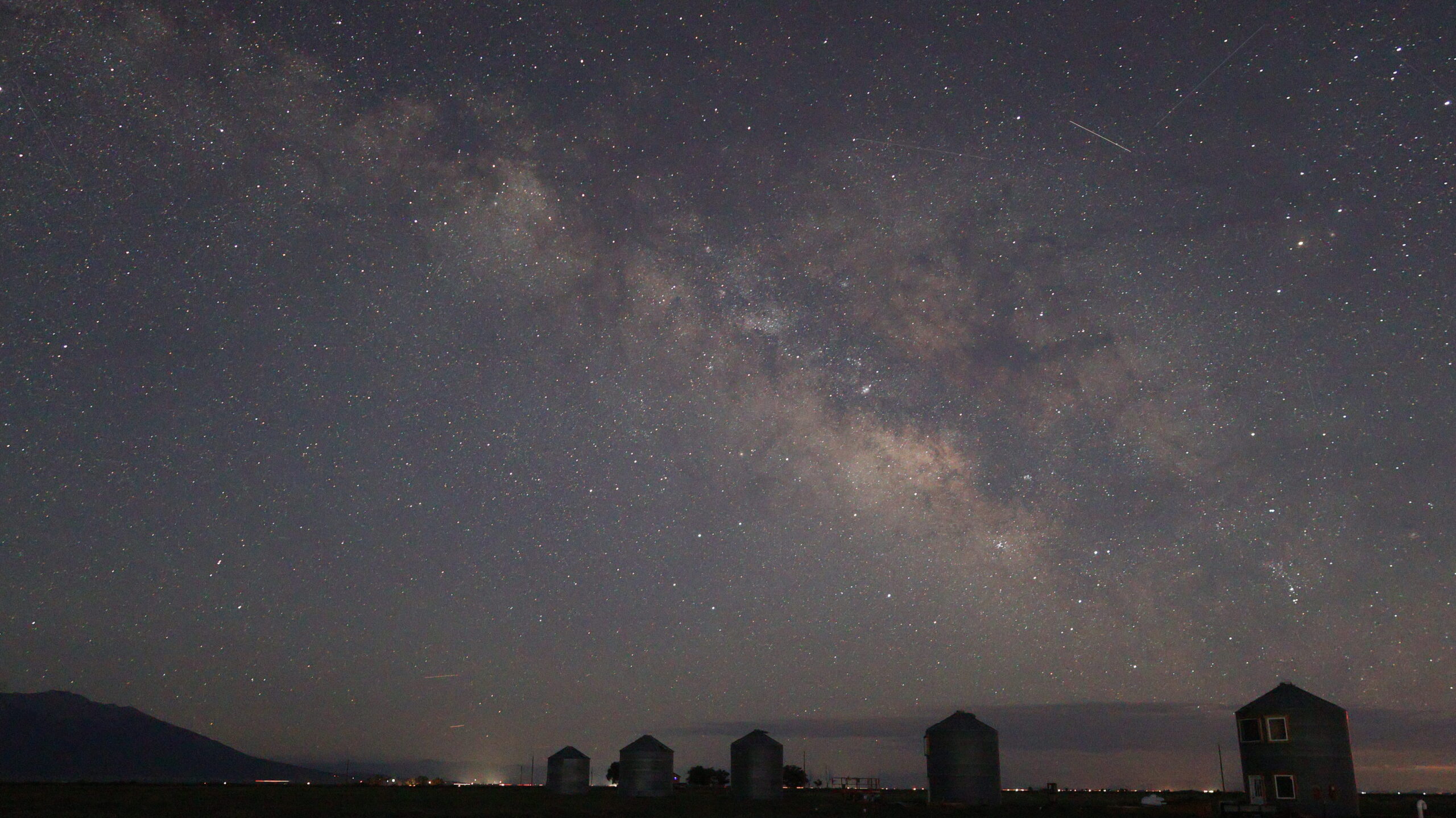
Light Frames:
Light frames are the actual photographs of your target (e.g., Galaxy, Nebula, Stars, etc…). You want to take as many of these as time allows.
Dark’s Frames:
When taking long exposure images there is thermal variance in the sensor that can cause noise in the final image. Taking dark frames allows for this thermal variations to be removed from the final image.
Dark frames need to be taken at the same exposure length, temperature, and ISO as the light frames. To take dark frames put the lens cap on, or remove the lens entirely and put the dust cover on the camera. That way the only data captured is the variance in the sensor.
A target of 20 to 30 dark frames should be captured.
Flat Frames:
Flat frames are used to remove harsh gradients and remove dust or imperfections from the optics. To take a flat frame, you want to keep the optics attached to the camera and take an image of a even white light. This can be accomplished by attaching a white tee shirt to the camera or using a device like an iPad to photograph a white screen. This should be at the same ISO, Focus as your Light shots. It is recommended that the resulting histogram is roughly centered and not skewed to either side. This is likely to be roughly 1/4000 shutter speed.
A target of 20 or more flat frames should be captured
Bias Frames:
Your camera naturally has readout noise as it reads each pixel on the camera sensor. This readout noise is called Bias. To capture Bias frames, use the fastest shutter speed possible for camera. Keep the lens cap on, and use the same ISO as your light frames.
A target of 20 – 40 bias frames should be captured.